www.Facebook.com/DelAirRockhounds
Member of the California & American Federation of Mineralogical Societies
Mailing Address: P.O. Box 7618, Van Nuys, CA 91409


Thursday July 3: NO GENERAL MEETING - OUR DARK MONTH
Friday July 4: Independence Day
Saturday July 12: Wrightwood Potluck Field Trip - Paid Members Only
Thursday July 17: Board Meeting - 7:00 pm at Shellie Van Winkle's home. NOTE: 30 minutes earlier
***********************************************************
IMPORTANT ANNOUNCEMENT
Beginning in August 2025, our general meeting start time will be changed from 7:30 pm to 7:00 pm. 30 minutes earlier! Please make note of this change so as to not arrive late. Our monthly board meeting will also start 30 minutes earlier, at 7:00 pm, beginning with the July board meeting on Thursday July 17, 2025 at Shellie Van Winkle's home.
***********************************************************
August 2025 Program:
Annual Ice Cream, Bingo & Summer Show & Tell

It's that time of year to once again celebrate the return from our summer break with our annual Ice Cream Bingo Social & Summer Finds Show and Tell. Come join us for some delicious ice cream and a few rousing games of bingo for fabulous prizes. Don't forget to bring in those special rockhound items you found or purchased during your travels and share with the group.
************************************************************
August's Rocks of the Month are Peridot, Sardonyx and Spinel
Peridot, Spinel and Sardonyx are all birthstones for the month of August. It will be fun to see what our membership can come up with this month to share with the group.
SHOP DAY REPORT
June 7th and it was Shop Day at Jeff’s… New and not so new members worked with some different tools for the first time and finished some very nice cabs, slabs, jewelry items and more. We all had a good time talking to each other and working on rock. Thanks to Jeff for letting us gather at his home for this event. Members who took advantage of this shop day were: Debbie Schoenmann, Dan & Diana Durfee, Joe Mastro, Dr. Oh, Dean Tran, Olga Wolf and Alexander Tran. Jeff Dengrove and Maxine & Bob Dearborn helped with the projects. A Fun Day With Rock!!!
************************************************************************
July 2025 Field Trip - For Paid Members Only
Our Annual Wrightwood, CA Pot-Luck & Field Trip Saturday, July 12 - 10:00 AM–4:00 PM
It's once again, that time of year, for our annual pot-luck/field trip to Wrightwood, CA for actinolite, schist, marble and possibly even lepidolite and rhodonite. Shellie has again volunteered her vacation home as our staging grounds and potluck site for this not to be missed event. Not only is it our annual event, it is also the annual Wrightwood Mountaineering Days Festival held in downtown Wrightwood less than a mile down the street from Shellie's home. A second fun event to partake in on this Saturday afternoon. So, bring your potluck main dish, side dish or dessert with enough to feed 6-8 people along with your rock hammer and a bag or box to tote your finds home in. Coffee and tea will be provided along with pastries for breakfast but please bring your own soft drinks or bottled water. Please take pictures while at this event and submit them to Chris Ward for inclusion in the club bulletin. Remember, we have no general meeting in July but there will be a July bulletin further reminding you of this event. It is about a 90 minute drive from the Valley. Please use your Google Maps or other GPS to get you there. It is a very easy drive. Hope to see you all there.
************************************************************************
Thursday June 5: General Meeting
Saturday June 7: Shop Day - This Event For Paid Members Only
Friday June 13: Burbank Nature Center Talk
Sunday June 15: Father's Day
Thursday June 19: Board Meeting
Friday June 20: First Day of Summer
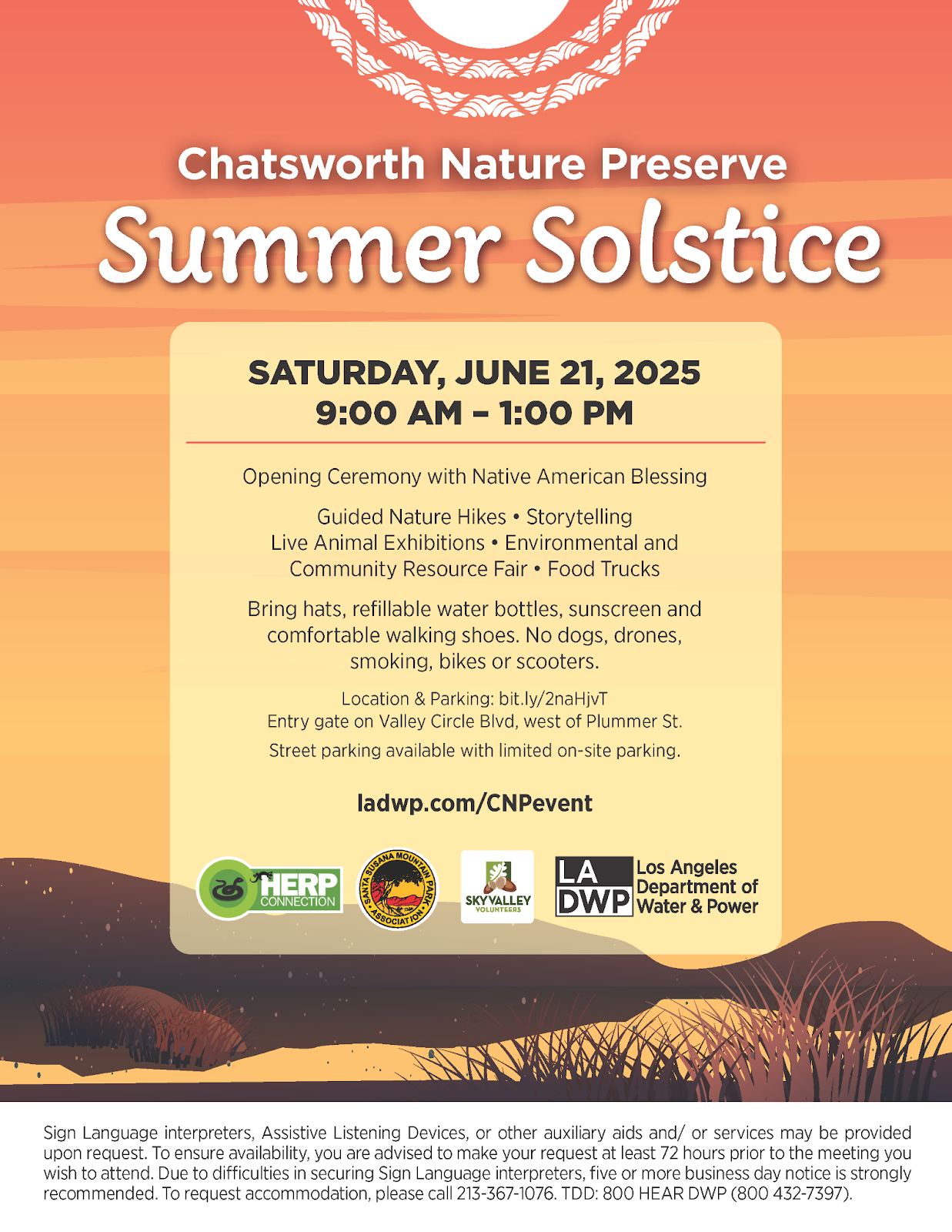
Saturday June 21: DWP Summer Solstice Festival
****************************************************
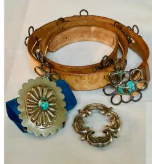
June 2025 Program: Turquoise & Southwestern Pueblo Jewelry
Presented by: Maxine & Bob Dearborn
Members, Maxine & Bob Dearborn, will give a little history on Turquoise used in the Southwest Pueblo’s and what to look for in Fake and Treated Turquoise. They will also look at the different styles of jewelry made in some of the different pueblos. A program that will include a number of jewelry specimens to look at.
****************************************************
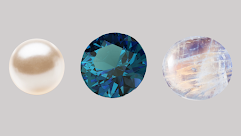
June's Rocks of the Month: Pearl, Alexandrite & Moonstone
Pearl, alexandrite and moonstone are all birthstones for the month of June. It will be fun to see what our membership can come up with this month to share with the group.
****************************************************
Education Team Report:
Our club Youth Education Outreach Program was very busy this month. At one point, our members talked at a 4th grade event, and went to our club general meeting that same evening. Then the very next morning we talked at a 5th grade event and then, that same evening, ran a school booth. A very busy time for sure! We also had an educational booth at the CFMS show on Saturday and Sunday. Then finishing up the month, we had another school booth to run. WOW! WE DID GOOD! Members who helped with all of this club activity were Bob Knox, Shellie VanWinkle, Bernadette Friedman, Pam Abbott, Diana Durfee, Dan Farber, Jeff Dengrove and Maxine & Bob Dearborn! We were tired when it was all over, but we talked to many people about our club and rockhounding. And, we still have 2 more events scheduled in June!
****************************************************
July 2025 Field Trip Teaser: - This Event For Paid Members Only
Our Annual Wrightwood, CA Pot-Luck & Field Trip Saturday, July 12 - 10:00 AM–4:00 PM
It's once again, that time of year, for our annual pot-luck/field trip to Wrightwood, CA for actinolite, schist, marble and possibly even lepidolite and rhodonite. Shellie has again volunteered her vacation home as our staging grounds and pot-luck site for this not to be missed event. Not only is it our annual event, it is also the annual Wrightwood Mountaineering Days Festival held in downtown Wrightwood. A second fun event to partake in on this Saturday afternoon. So, bring your pot-luck main dish, side dish or dessert with enough to feed 6-8 people along with your rock hammer and a bag or box to tote your finds home in. Coffee and tea will be provided along with pastries for breakfast but please bring your own soft drinks or bottled water. Please take pictures while at this event and submit them to Chris Ward for inclusion in the club bulletin. Remember, we have no general meeting in July but there will be a July bulletin further reminding you of this event. It is about a 90 minute drive from the Valley. Please use your Google Maps or other GPS to get you there. It is a very easy drive. Hope to see you all there.
Thursday May 1: General Meeting 7:30 pm in our meeting room at Northridge United Methodist Church.
Sat & Sun May 10 & 11: CFMS Show & Convention
Sunday May 11: Mother's Day
Thursday May 15: Board Meeting
Monday May 26: Memorial Day
Saturday May 31: Soft Stone Carving Class (Paid Members Only)
********************************************************
May 2025 Program: Fluorescent Minerals
Presented by: Austin Lippincott
Austin Lippincott began teaching physics and engineering at Oak Park High School during the 2020-21 school year, after earning a physics degree from California Polytechnic State University in San Luis Obispo and a teaching credential through Western Governors University. Come join Austin this month at our general meeting for a fascinating look at the wonders and oddities of fluorescent minerals.
********************************************************************
May's Rock of the Month is: Any Fluorescent Rock
Fluorite, calcite, and adamite are common minerals that fluoresce, but it's not uncommon for ruby, kunzite, diamond, opal, zektzerite, sodalite, selenite, topaz and more to often react beautifully with UV light. So, in honor of our guest speaker this month, bring in your fluorescent minerals and your UV lights to share your glowing specimens with the group.
*********************************************************
May 2025 Field Trip: CFMS Show & Convention
Friday, May 9 – Show Set-up - noon to 6 pm Saturday, May 10 - Show Open: 10:00 AM–5:00 PM Sunday, May 11 - Show Open: 10:00 AM–4:00 PM Antelope Valley Fairgrounds - 2551 W Avenue H, Lancaster, CA 93536
Join us for the 2025 CFMS Show in conjunction with the AV Gem & Mineral Club's annual show to be held at the Antelope Valley Fairgrounds Saturday May 9 and Sunday May 11, 2025. The CFMS portion of this event features exhibits, Cracker Barrel with a Silent Auction and a banquet for CFMS member attendees. The Antelope Valley Gem & Mineral Club's portion of this event will include vendors, exhibits, kids activities, demonstrations and more. The Del-Air Rockhounds will be displaying our Volcano and Sedimentary rock displays and we sure could use your help in setting up and working the booth during this show. Please see Bob Knox or the Dearborns to let them know you are willing to volunteer your time to work our show booth. It will be most appreciated and you'll have a great time.
********************************************************
Upcoming Local Shows & Events:
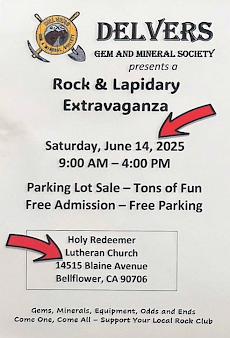
Support our sister club, the Delvers Gem & Mineral Society. Attend their annual show in June.
********************************************************
 Presented by Neil A. Mottinger
 Courtesy Geologyln.com
 Courtesy Google Images